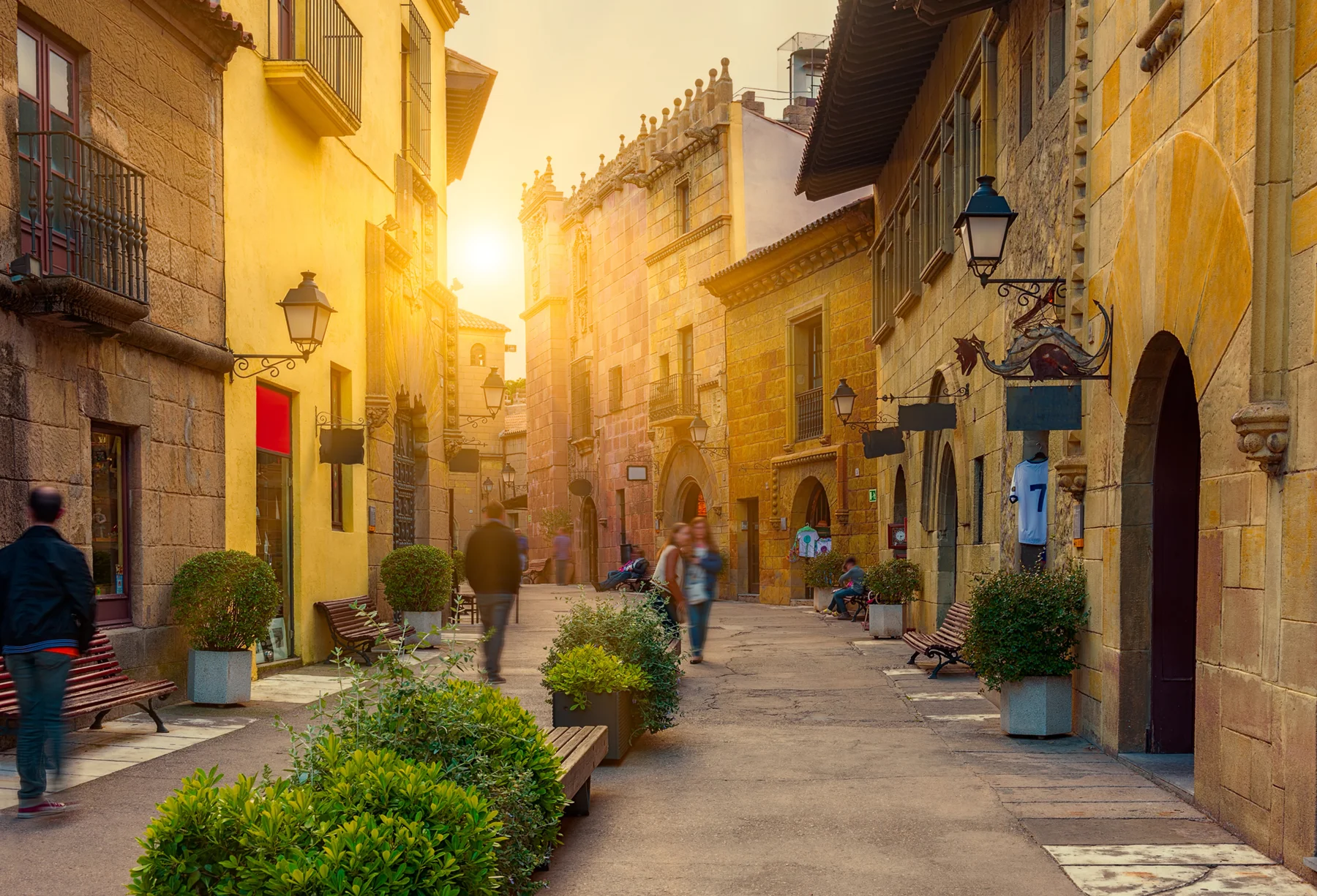
When my clients go to Italy, I tell them to pay attention to three things.
Not the church ceilings.
Not the wine lists.
Not the pasta.
I tell them to watch how people eat, how they move, and how they sleep.
Because that’s where the real lesson is.
And no, I don’t mean, “Go to Europe, eat gelato, and call it wellness.” I mean step back and observe the rhythm of life itself. After years of coaching people through vacations all over the world, I can tell you this: most Americans come home talking about the food, but the bigger story was usually the pace.
They don’t eat like they’re trying to beat a timer
This is the first thing people notice, even if they don’t have language for it yet.
Meals in Italy are often treated like an actual event. People sit down. They linger. They talk. They eat in courses. They don’t wolf down lunch in six minutes between notifications and call that “being disciplined.”
The exact numbers vary depending on the dataset, but the broad pattern is clear: Americans spend relatively little time eating compared with many Mediterranean countries. U.S. time-use data recently put Americans at about 1.24 hours per day for eating and drinking, while older international comparisons have consistently shown the U.S. near the low end and countries like France, Italy, and Spain spending more time at meals.
That matters more than most people think.
Because in coaching, I’ve seen this over and over: people don’t just struggle with nutrition because they “lack willpower.” They struggle because their environment teaches them to rush, multitask, disconnect, and keep going. Fast meals go beautifully with stress, distraction, overconsumption, and poor satiety cues.
Slowing down won’t solve everything. But it changes a lot.
And food quality matters too. In the U.S., heavily processed foods make up a huge share of calories, while controlled NIH research found people eating an ultra-processed diet consumed roughly 500 more calories per day than when they ate minimally processed food, even when the diets were matched for many nutrients on paper.
That’s one of the first things I want clients to notice abroad: not just what they ate, but whether they remembered how to have a meal.
They build movement into life instead of outsourcing it to the gym
This is where old European cities absolutely stomp us.
Many of the places Americans love to visit were built long before cars dominated daily life. Streets are tighter. Daily errands require your legs. You walk to coffee. You walk to dinner. You walk because that’s just how the place works.
That doesn’t mean everyone there is automatically healthy. Let’s not get carried away.
But it does mean the environment naturally asks more of your body. European and WHO public-health guidance has leaned hard into walking and cycling as mainstream transportation because daily built-in movement supports health in ways that go far beyond a 45-minute workout.
My clients regularly come back from trips like this averaging 15,000 to 20,000 steps a day without ever setting out to “do cardio.”
And that’s a coaching lesson.
At home, they tell me they need more motivation. On vacation, they accidentally expose the truth: a lot of what they thought was a motivation problem was actually an environment problem.
Put someone in a place where walking is the default and movement rises.
Put that same person in a life built around parking lots, long commutes, desk work, and convenience, and movement falls.
That isn’t laziness. That’s design.
They often respect rest more than we do
Now, this needs a little nuance because Americans love turning other cultures into cartoons.
Yes, parts of Southern Europe have long histories of longer lunches, slower midday rhythms, later evenings, and more social meals. Yes, there are still places where businesses pause during the day. But the full tourist stereotype of everyone disappearing for a giant daily siesta is exaggerated and far less universal in modern life than people think.
Still, the deeper point stands.
Many Americans are embarrassingly bad at resting.
We rush breakfast, sit all day, cram exercise into tiny windows, eat dinner half-distracted, scroll until midnight, and then act confused about why we feel inflamed, anxious, hungry, tired, and wired at the same time.
What I often see abroad is not perfection, but permission.
Permission to pause.
Permission to sit.
Permission to have lunch like a human being.
Permission to not treat every hour of the day like it’s being hunted by productivity.
And yes, sleep matters here too. Research continues to link poorer sleep with more processed food intake, greater appetite dysregulation, and worse overall health behavior.
That’s why I coach people to watch systems, not just food choices.
What I’ve seen from years of coaching vacations
Here’s the pattern I see all the time.
Clients leave for Italy or places with a similar rhythm convinced they’re about to “fall off.”
They expect to gain weight, feel puffy, drink too much wine, eat too much bread, and come home needing some hard restart.
And then a funny thing happens.
A lot of them come back lighter.
Not because they tracked macros.
Not because they punished themselves in a hotel gym.
Not because they ordered grilled chicken and broccoli while staring at everyone else’s pasta like a martyr.
They come back feeling better, moving better, sleeping better, less inflamed, less frantic, and sometimes weighing less than when they left.
That is one of the clearest real-world examples of what we call the minimum effective dose.
If sitting down to eat better food for more time, connecting with other people, walking everywhere, and sleeping more can produce outcomes that many Americans fail to get while obsessing over fitness back home, that’s saying something.
Actually, it says a lot.
It says health probably has a lot less to do with chasing extremes and a lot more to do with building a life that stops working against you.
This is one of the teaching points I come back to again and again with clients. American fitness culture has become strangely obsessive. We have people micromanaging meal timing, demonizing entire food groups, buying more supplements than groceries, and acting like missing three workouts means their whole life is off the rails.
Meanwhile, there are plenty of healthy people all over the world with no gym membership, moderate alcohol intake, no wearable technology, and no interest in optimization culture whatsoever. They walk, talk, eat, rest, and sleep their way into a level of health that many Americans are trying to biohack.
That doesn’t mean the gym is useless. I’ve built my career in and around it. It does mean we’ve gotten silly about what matters most.
When someone goes to a place like this, enjoys their meals, has some wine, strolls through the city, laughs with family, sleeps more, and comes home in better shape than they left, it forces the right question:
Are we underestimating the power of simple things because we’ve become addicted to complicated ones?
That’s the real lesson.
Not that America is doomed.
Not that Europe is magical.
Not that pasta is secretly a fat-loss food.
The lesson is that a human body often responds incredibly well to a life with better pacing, better food, more walking, more connection, and more rest.
And for a lot of people, that truth is both comforting and a little embarrassing.
What I just told American clients heading to Italy
Watch how long meals take.
Watch how rarely people seem to eat standing up, driving, or staring at a screen.
Watch how much movement happens before anyone says the word “exercise.”
Watch how normal it is to sit, talk, stroll, pause, and resume.
Watch how close the food still seems to the source.
And if your body feels better there, don’t be so quick to credit the pasta or romanticize olive oil like it’s a religious experience.
Ask the better question:
What about this environment is making healthier behavior feel more automatic?
That’s the coaching question.
That’s the question that actually helps when you get home.
Because you do not need to become Italian.
You do not need to move to Sardinia.
You do not need to build a three-hour lunch into every Tuesday.
But you should probably steal a few things.
Sit down when you eat.
Slow the meal down.
Walk more often than you drive when you can.
Protect sleep like it matters.
Stop treating stress like a personality trait.
Talk to people.
Have meals with people.
Build a life that gives your body half a chance.
The real takeaway
When Americans go to Italy, Sardinia, or other slower, more walkable cultures, they usually come home talking about the food.
I think the bigger lesson is the cadence.
They eat slower.
They move more.
They often rest better.
And because of that, health-supportive behavior gets woven into the day instead of awkwardly stapled onto the edge of it.
That’s what I want clients to notice on vacation in Italy.
Not just what was on the plate.
But the way the whole day was built.
And once you see that, you can stop treating health like a willpower contest and start treating it like what it really is:
a lifestyle design problem.