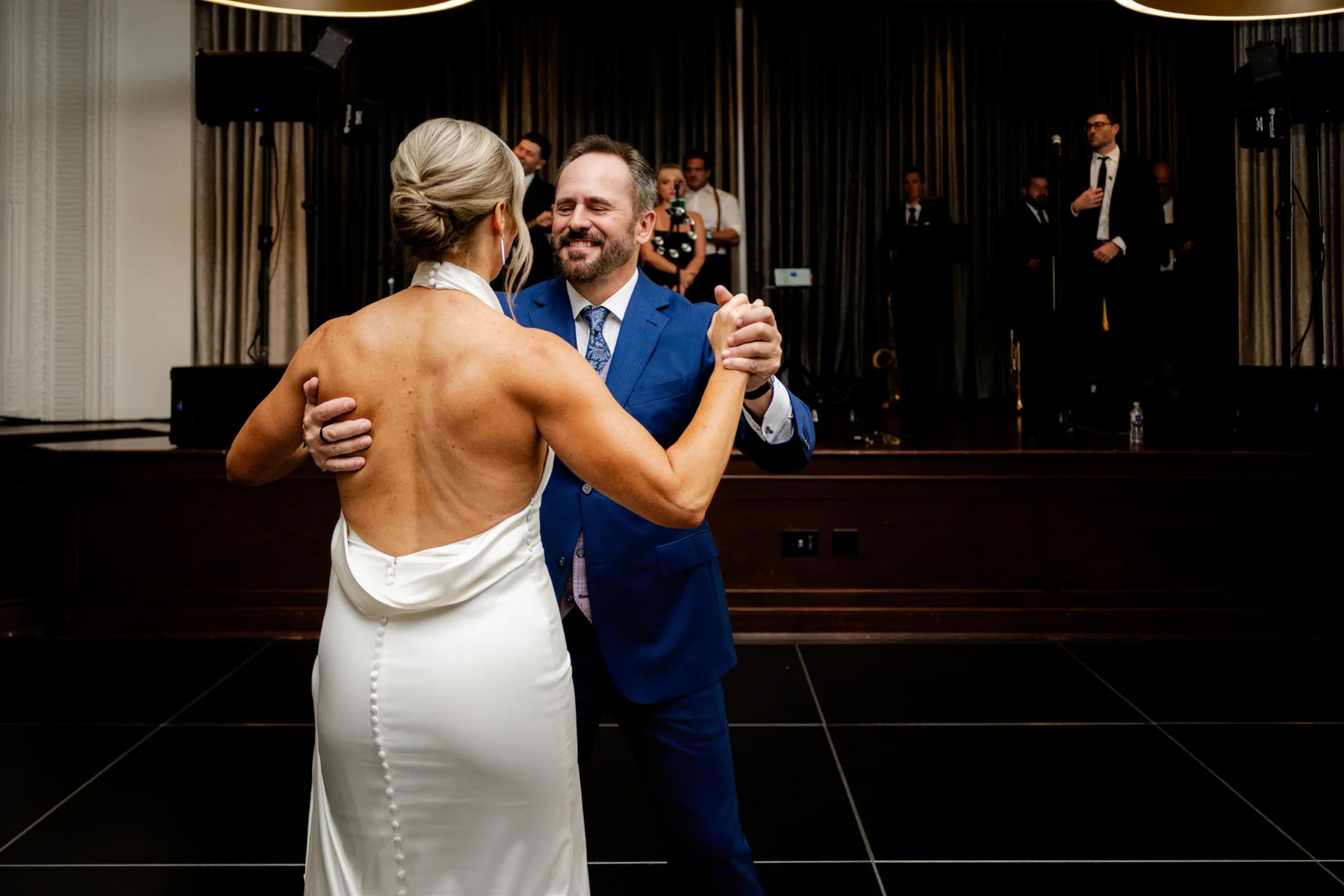
A longtime client of mine got married last weekend.
We’ve worked together for 11 years.
So naturally, with one of the biggest days of her life approaching, we did what the fitness industry tells every bride to do:
Absolutely fucking nothing dramatic.
No wedding shred.
No 12-week transformation.
No emergency cardio.
No cutting out carbs because apparently potatoes become dangerous once someone buys a white dress.
No attempt to turn a healthy woman into a temporarily dehydrated anatomy chart.
We maintained.
And I think it was one of the better coaching decisions we’ve made together.
She was already happy
Going into 2026, we talked about what she wanted from the year.
Her answer was refreshingly boring:
She already liked how she looked.
She already felt confident in her body.
She didn't need to lose a bunch of weight.
What she did want was to stop hurting.
Her back had bothered her through much of the previous year, and she was tired of organizing exercise around what she could tolerate that day.
So we made 2026 her year of recovery.
That meant power walking instead of constantly pushing intensity.
Stretching before bed.
Hip PT work.
Massage every four to six weeks.
Paying more attention to sleep and recovery.
And occasionally reminding her that just because she could do more exercise didn't mean more exercise was going to help.
That became increasingly important as the wedding got closer.
Because deadlines do funny things to otherwise rational people.
The wedding started whispering
There were moments when the pull showed up.
Maybe she should get a little leaner.
Maybe she should push harder.
Maybe maintenance calories were too high.
Maybe she should tighten things up because the wedding was getting closer.
At one point she told me almost exactly what was happening: she felt nervous eating at maintenance with a check-in coming, so she lowered the calories.
That's useful coaching information.
Because the spreadsheet wasn't making that decision.
Anxiety was.
We talked about the wedding several times throughout the year, and one sentence eventually clarified the whole strategy:
I'd rather be pain-free for the wedding than shredded.
There it was.
Decision made.
Maintenance isn't doing nothing
This is where people misunderstand maintenance.
They hear "maintain" and think:
Coast.
But she had already spent years building the thing we were maintaining.
For 11 years we'd practiced some version of the same boring skills:
Track food.
Learn how to flex calories around real life.
Eat enough protein.
Train consistently.
Sleep.
Notice when alcohol starts costing more than it's worth.
Adjust when your body hurts.
Stop turning one unusual meal into a three-day hostage situation.
Return to normal.
Again.
And again.
And again.
She'd weighed herself daily for about six years before experimenting this year with putting the scale away.
At first that felt strange.
Then she realized she already knew her body remarkably well.
Digestion. Bloat. How her clothes fit. How she looked in the morning. How she felt training.
She didn't suddenly become reckless because a scale wasn't supervising her.
That's what years of practice are supposed to produce.
You stop needing every guardrail forever.
We did make adjustments
Maintenance didn't mean ignoring what was happening.
Earlier this year, she noticed maintenance weeks were becoming "cheatier" than they were actually maintenancy.
So we changed the structure.
She went back to the calorie framework she'd used successfully for years because she was better at flexing within it.
When alcohol started creeping up, she noticed immediately that she slept like shit and felt like shit the next morning.
When her back felt better, she caught herself starting to abandon the stretching that had helped it feel better.
That one became almost comical:
"My back feels good!"
Stops doing the thing helping the back feel good.
Human beings. Incredible creatures.
So the job wasn't to invent a more advanced program.
It was to keep noticing.
Keep adjusting.
Keep returning to what worked.
Then the wedding arrived
The week of the wedding brought plenty of anticipatory stress.
Of course it did.
This was a huge life event.
But there was no frantic final cut.
No peak week.
No trying to squeeze five more pounds out of her body before walking down the aisle.
And when the day came, she looked incredible.
Strong.
Healthy.
Muscular.
Vibrant.
Completely herself.
During the dance, I apparently yelled, "Nice back!"
Because after 15 years of coaching, I am apparently incapable of attending a formal event without evaluating someone's lat development.
But what struck me wasn't that she looked lean.
It was that she looked well.
And happy.
Even then, body image showed up
This part matters too.
She told me afterward that she still felt self-conscious about her belly.
Eleven years of training doesn't immunize someone from having a human brain.
But instead of letting that thought run the day, she caught it and told herself:
This simply doesn't matter.
That may be one of my favorite outcomes from the entire process.
The goal was never to construct a body so perfect that insecurity could never appear.
Good luck with that.
The goal was to build enough perspective that when the thought appeared, it didn't get to decide what happened next.
She danced.
She celebrated.
She got married.
The belly thought didn't get a vote.
Eleven years earlier
Sitting at the wedding, I kept thinking back to when I first started my business.
I pitched her my coaching services at a Caribou Coffee in Waukee.
Then the years passed.
Training sessions.
Check-ins.
Dieting phases.
Maintenance phases.
Hard conversations.
Injuries.
Life changes.
Wins.
Tears.
Periods where things clicked and periods where they absolutely did not.
All those little repetitions that look insignificant when you're living them one Tuesday at a time.
And then I'm sitting at her wedding, listening to her husband describe her in his vows.
He mentioned her health.
Her discipline.
Her demeanor.
That one got me.
Because suddenly 11 years of work wasn't showing up as a progress photo or a body-fat percentage.
It was showing up in a person.
That's the proof of concept
We spend a lot of time in fitness measuring things.
Calories.
Protein.
Steps.
Weight.
Body fat.
Heart rate.
Sleep.
They're useful.
I use them every day.
But they're measurements of the practice.
They're not the point of the practice.
The point is what the practice eventually lets you do.
Feel comfortable in your body.
Recover when life knocks you sideways.
Know when to push.
Know when not to.
Walk into an important season without needing to reinvent yourself.
Stand in a room full of people you love and actually be present for it.
That's why her wedding felt like a proof of concept.
Not for a successful wedding diet.
For 11 years of showing up.
And now?
Here's my favorite part.
The wedding is over, and we're not immediately hunting for another thing to fix.
She told me she doesn't really want anything different right now.
She knows weight will move around.
She knows Q4 means returning to normal routines.
She has more free time coming, but we're already talking about whether her back can tolerate more exercise rather than automatically stuffing more workouts into the calendar because they're available.
That's the same lesson again.
More isn't automatically better.
The next goal doesn't always need to be fat loss.
Sometimes the goal is to keep the body you already like.
Sometimes it's getting out of pain.
Sometimes it's practicing maintenance.
Sometimes it's having enough physical and mental bandwidth left to enjoy the life all this health stuff was supposed to support in the first place.
We didn't get her wedding ready.
We spent 11 years helping her get life ready.
The wedding just happened to be a beautiful proof of concept.