Introduction
For years, the conversation around social media has mostly focused on kids.
That makes sense. Children and teenagers are still forming their identities, learning emotional regulation, building social confidence, and figuring out how to separate “this is popular” from “this is true.”
But adults are not magically immune because they turned eighteen.
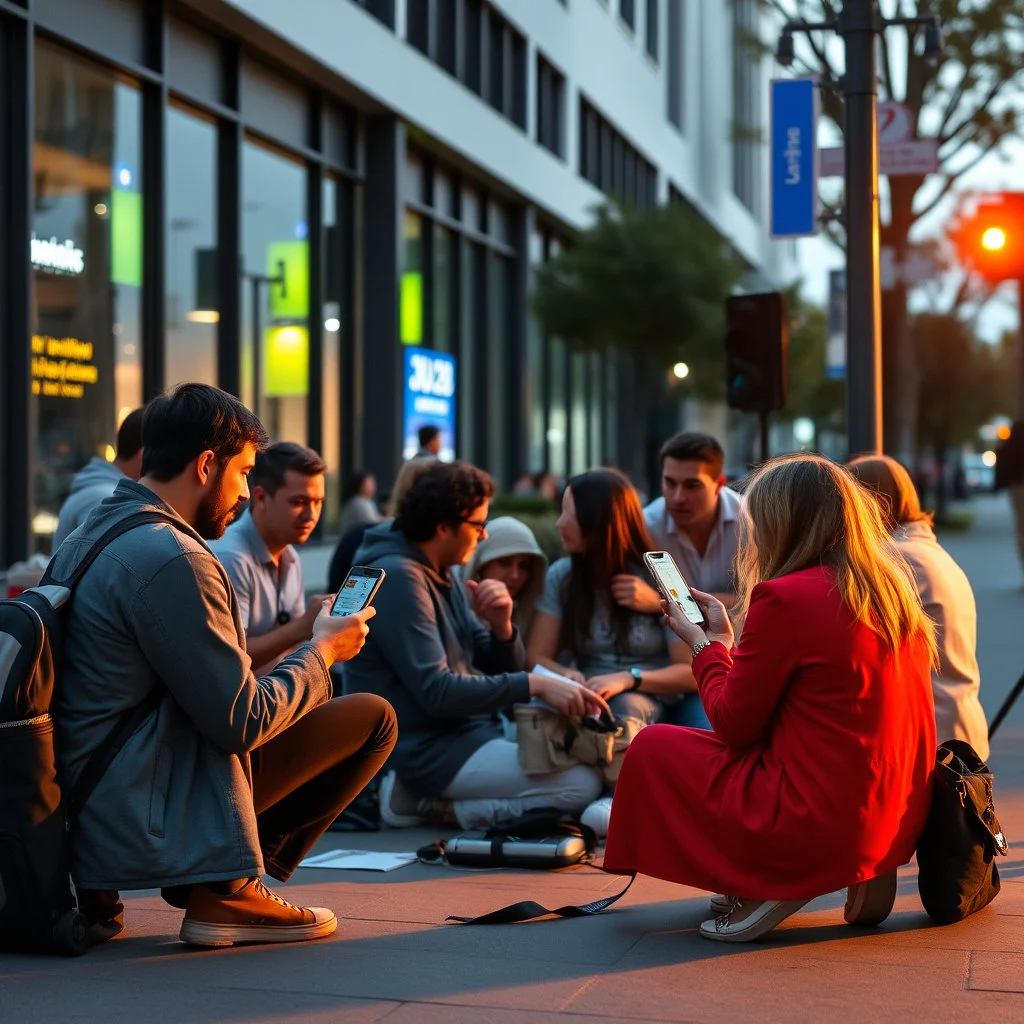
Adults still compare.
Adults still absorb fear.
Adults still get pulled into status games, body-image pressure, health misinformation, and endless arguments about what counts as “clean,” “toxic,” “natural,” “optimal,” or “healthy.”
We like to imagine social media is something we simply use.
We open the app. We scroll. We watch a few recipe videos, a few workout clips, a few “what I eat in a day” posts, a few people with perfect lighting explaining why our pantry is poisoning us.
Then we close the app and return to real life.
At least, that is the story we tell ourselves.
The less comfortable truth is that social media may be using us too. It trains our attention. It rewards our fears. It teaches us what to admire, what to distrust, what to compare, and what to feel guilty about.
And when that influence attaches itself to food, fitness, and health, the effects can be sneaky.
A recent study published in BMC Public Health looked at the relationship between social media use and orthorexia nervosa, a pattern of disordered eating centered on an obsessive fixation with food purity, “clean” eating, and the need to eat correctly.
The study does not prove that social media causes orthorexia.
That matters.
We should not overstate what one cross-sectional study can tell us.
But it did find that certain types of social media use were associated with stronger orthorexic tendencies. And for anyone trying to build a healthier relationship with food, that is worth paying attention to.
Because a feed full of “healthy” content can still make a person less healthy.
What the Science Says
Orthorexia nervosa is not the same thing as caring about nutrition.
It is not orthorexia to eat vegetables, read labels, avoid foods that make you feel bad, prioritize protein, cook at home, or make thoughtful choices about what goes into your body.
Those things can be wise.
The problem begins when the pursuit of healthy eating becomes rigid, fearful, obsessive, and disruptive.
The term orthorexia was coined in 1997 by Dr. Steven Bratman to describe an unhealthy obsession with eating the “right” foods. Orthorexia is not formally recognized as a diagnosis in the DSM-5-TR, but organizations such as the National Eating Disorders Association describe it as an obsession with proper or healthful eating that can damage well-being, nutrition, and social functioning.
That distinction is important.
Healthy eating should give you more life.
Orthorexic eating slowly takes life away.
It can look like spending excessive time researching food, feeling anxious when meals are outside your control, avoiding restaurants or family gatherings, cutting out more and more foods over time, feeling morally superior when you eat “clean,” or feeling guilty and ashamed when you eat something “off plan.”
In other words, the issue is not the salad.
The issue is the prison built around the salad.
In the 2025 BMC Public Health study, researchers surveyed 892 undergraduate students at Yeditepe University in Istanbul. The average participant was about 21 years old, and 82 percent of the sample was female.
Researchers measured orthorexic tendencies using the Orto-11 scale. Lower scores on this scale suggest stronger orthorexic tendencies. They also measured social media integration using the Social Media Integration Use Scale, which looks at how deeply social media is woven into someone’s daily routines and emotional life.
That second piece is important.
The study did not simply ask, “How many hours are you online?”
It looked more closely at how much social media had become part of how people think, feel, connect, compare, and make decisions.
The main finding was that higher social media integration was associated with stronger orthorexic tendencies. The correlation was statistically significant but small, which means the relationship was real in this sample, but not huge.
Nearly a quarter of participants showed orthorexic tendencies. Nutrition and dietetics students had slightly higher orthorexic tendencies than students in other fields. Several lifestyle factors were also associated with higher orthorexia risk, including recent dieting, receiving medical nutrition therapy, exercising above recommended levels, following nutrition accounts, and making food purchases based on social media recommendations.
None of those factors automatically means someone has orthorexia.
A person can follow nutrition accounts and have a healthy relationship with food.
A person can exercise more than the minimum recommendations because they are an athlete, have a physical job, or simply love movement.
A person can receive medical nutrition therapy because they are responsibly managing a health condition.
The danger is not usually one behavior by itself.
The danger is the pattern.
The more food becomes governed by fear, purity, identity, comparison, and outside validation, the more health can become something that looks good from the outside while quietly making life smaller on the inside.
The study also found that platform type mattered.
Instagram users showed stronger orthorexic tendencies than non-users.
Other visual platforms, including Pinterest and TikTok, were also more connected with orthorexic patterns.
Platforms such as Facebook, YouTube, WhatsApp, Snapchat, Twitter, and LinkedIn did not show the same significant associations in this study.
This lines up with earlier research from 2017, which found that Instagram use was linked to increased symptoms of orthorexia nervosa, especially within the healthy eating community on the platform.
Again, this does not prove Instagram causes orthorexia. People who already care
intensely about food, body image, or health may be more likely to seek out that content.
But the relationship makes sense.
The human brain is deeply visual. We do not experience images as neutral information.
We feel them.
A written sentence that says, “Eat more whole foods” is one thing.
A beautiful person with visible abs, flawless skin, a spotless kitchen, and a perfectly arranged “clean” meal is another.
That image does not merely communicate nutrition advice. It communicates status. It suggests discipline. It suggests beauty. It suggests purity. It suggests that if your life does not look like this, perhaps you are doing something wrong.
A smoothie bowl becomes a moral lecture with berries.
A grocery haul becomes a sermon.
A lean body becomes a credential.
A stranger’s lunch becomes a standard you silently measure yourself against.
Then the algorithm gets involved.
Social media does not simply show you the world. It shows you more of whatever kept you watching.
Pause on a video about seed oils, and soon your feed can become a courtroom where every packaged food is on trial.
Watch a few videos on gut health, and suddenly every normal human sensation becomes evidence of inflammation, toxins, parasites, histamine intolerance, cortisol imbalance, or some unnamed metabolic betrayal.
Click on one “clean eating” post, and the algorithm does not ask, “Is this making you healthier?”
It asks, “Will you keep looking?”
That is the business model.
Not truth.
Not wisdom.
Not health.
Attention.
What This Means in Real Life
One of the reasons this topic is tricky is that social media health content often wears the costume of virtue.
It does not look like junk.
It looks like discipline.
It looks like wellness.
It looks like education.
It looks like someone trying to help you “optimize” your life.
That is what makes it powerful.
No one thinks, “I am being pulled into disordered eating.”
They think, “I am finally getting serious about my health.”
No one thinks, “My food world is shrinking.”
They think, “My standards are improving.”
No one thinks, “Fear is running the show.”
They think, “Now I know the truth.”
This is how many bad health ideas spread. They do not arrive dressed as obvious nonsense. They arrive as simple rules, confident warnings, dramatic before-and-after images, personal testimonies, and repeated messages that make complexity feel unnecessary.
But nutrition is not a religion.
Food is not a purity test.
And your worth as a person does not rise and fall with the cleanliness of your lunch.
For most people, health is simpler than the internet makes it seem.
Not always easy.
But simpler.
Most people do not need five new podcasts, six new influencers, three new supplement stacks, and a weekly investigation into whether bananas are secretly sabotaging their hormones.
They need to sleep better.
They need to move consistently.
They need to eat enough protein and fiber.
They need to drink water.
They need to strength train.
They need to manage stress.
They need to stop making the perfect plan and start practicing the good-enough plan.
They need consistency more than novelty.
But social media has a hard time selling “repeat the basics for the next ten years.”
That does not trend well.
“Go for a walk, lift weights, eat mostly whole foods, keep some flexibility, and get to bed on time” is good advice. But it does not produce hours of content every week. It does not create panic. It does not create urgency. It does not make you feel like you are one secret away from finally fixing yourself.
The mountain of health information online does not prove that health is endlessly complicated.
It often proves that we have become very good at consuming information and much less good at acting on what we already know.
There just is not that much new information most people need every week.
That may sound strange coming from someone who works in fitness, nutrition, sleep, stress management, and recovery coaching. But it is true.
A good coach should simplify your life, not make you feel like you need to become a full-time health researcher.
This also matters because coaching works better when the signal is clear.
A client may have one plan, one direction, and one trusted relationship. Then every time they are bored, tired, waiting in line, sitting in the car, or winding down at night, a dozen more “coaches” appear in their pocket.
One influencer says carbs are the problem.
Another says carbs are essential.
One says breakfast is mandatory.
Another says breakfast ruins your metabolism.
One says fasting is the key.
Another says fasting destroys hormones.
One says fruit is nature’s candy.
Another says fruit is medicine.
One says dairy is inflammatory.
Another says dairy is a superfood.
One says seed oils are toxic.
Another says worrying about seed oils is the real disorder.
No wonder people feel stuck.
It is hard enough to change your habits when life is busy, stress is high, sleep is short, and old patterns are familiar. Now add an endless stream of conflicting opinions and you have a recipe for paralysis.
More information is not always more helpful.
Sometimes it fragments attention.
And attention is the beginning of behavior change.
When attention is scattered, habits become scattered too.
Actionable Coaching Takeaways
A person does not need a formal diagnosis to benefit from taking food anxiety seriously.
Start by paying attention to how your social media feed makes you feel.
Does your feed make you more afraid of food?
Do you feel guilty after seeing certain food or fitness content?
Have you cut out foods mainly because of online fear-based messaging?
Do you feel anxious when you cannot control a meal?
Do you avoid social events because of food?
Do you trust your body less than you used to?
Do you keep adding more rules but not feeling more peaceful?
Do you feel like you need to consume health content every week just to stay safe or informed?
Do you change your plan often because of something you saw online?
Do you feel calmer, freer, and more capable after using social media, or more suspicious, inferior, and overwhelmed?
Those questions matter because orthorexia often hides behind praise.
People may compliment the discipline.
They may admire the body.
They may ask for the meal plan.
They may call it dedication.
But the outside does not always reveal the inside.
A person can look fit and feel trapped.
A person can eat “clean” and be consumed by fear.
A person can know a lot about nutrition and have very little peace around food.
A healthier media diet does not have to be extreme.
You can begin by unfollowing accounts that make you feel ashamed, panicked, or inferior.
Mute accounts that turn food into a moral contest.
Be careful with influencers who speak in absolutes.
Be skeptical of anyone who demonizes entire food groups without context.
Notice whether an account helps you take action or merely keeps you consuming.
Replace scrolling time with walking, reading, cooking, training, talking to someone, or doing the boring habit you already know would help.
Most importantly, stop confusing constant exposure to health content with practicing health.
They are not the same thing.
Watching ten videos about exercise is not exercise.
Saving high-protein recipes is not eating protein.
Listening to podcasts about sleep is not going to bed.
Researching stress management is not breathing, walking, journaling, stretching, talking, or setting boundaries.
At some point, we need to exit the lecture hall and enter the workshop.
Health is built in the doing.
The goal of nutrition coaching should not be to create a person who can only function under perfect conditions.
It should not create someone who can only eat if they know the macros.
Or only feel safe if they prepared the food.
Or only stay calm if every ingredient is approved.
Or only feel successful if their body looks like the people they follow online.
That is not health.
That is fragility.
Real health is more flexible than that.
It can eat a home-cooked meal and enjoy a restaurant.
It can train hard and rest without guilt.
It can care about protein and still enjoy birthday cake.
It can read a label without fearing every ingredient.
It can pursue improvement without turning life into a purity test.
It can live in the real world.
Closing Thoughts From Two Decades of Coaching
In nearly two decades of coaching, I have watched the health and fitness world become louder, faster, more emotional, and more confusing.
People used to come to coaching mostly needing help with habits.
Now, many come in needing help separating their own thoughts from the dozens of voices they carry around in their pocket.
They are not lazy.
They are overloaded.
They are not short on information.
They are short on action.
They have heard too many opinions, followed too many rules, saved too many posts, feared too many foods, and compared themselves to too many strangers.
This is why media diets can be such a useful coaching tool.
A media diet does not always mean deleting every app forever. It means deliberately reducing or removing digital inputs that are shaping your thoughts, emotions, values, and behaviors in ways you may not realize.
For some people, that means unfollowing certain accounts.
For others, it means deleting certain apps during the week.
For others, it means taking a full break from social media for a month or longer.
Sometimes the goal is to reduce anxiety.
Sometimes it is to improve body image.
Sometimes it is to stop food fear.
Sometimes it is to make room for action.
Because many people are not lacking information.
They are drowning in it.
I’ve watched people become calmer, more consistent, and more confident simply by turning down the noise. They stop second-guessing every food choice. They stop changing their plan every few days. They stop comparing their body to strangers. They stop treating every meal like a referendum on their character.
The result is not ignorance.
It is clarity.
And clarity is underrated.
The basics still work.
Move your body.
Lift weights.
Eat enough protein.
Eat plants.
Sleep.
Hydrate.
Manage stress.
Recover.
Repeat.
There is nuance, of course. There always is. But most people do not need a more complicated plan. They need a quieter environment, a clearer path, and fewer people interrupting their follow-through.
The simplicity of fitness, nutrition, and health is often lost when we are convinced there are multiple hours of content we need to consume every week just to keep up.
There aren’t.
The mountain of information says less about how much more we need to know and more about how difficult it has become to act on what we already know.
Your feed should not make food feel dangerous.
It should not make your body feel like a project under public review.
It should not make health feel like a full-time job.
Health should give you freedom. If the tools you are using are stealing that freedom, it may be time to put them down.
References
Usta Ulutaş P, Okan Bakır B. The type of social media is a greater influential factor for orthorexia nervosa than the duration: a cross-sectional study. BMC Public Health. 2025;25:827. doi:10.1186/s12889-025-21335-0.
Turner PG, Lefevre CE. Instagram use is linked to increased symptoms of orthorexia nervosa. Eating and Weight Disorders. 2017;22(2):277–284. doi:10.1007/s40519-017-0364-2.
Dunn TM, Bratman S. On orthorexia nervosa: A review of the literature and proposed diagnostic criteria. Eating Behaviors. 2016;21:11–17. doi:10.1016/j.eatbeh.2015.12.006.
Calls to Action
If you want help building a healthier relationship with food, exercise, sleep, stress, and recovery without getting buried under internet noise, you can apply for coaching.
And if you want practical, grounded health and fitness writing delivered without the chaos of social media, join my mailing list.