Weighted vests, micro-workouts, and the underrated skill of keeping exercise alive
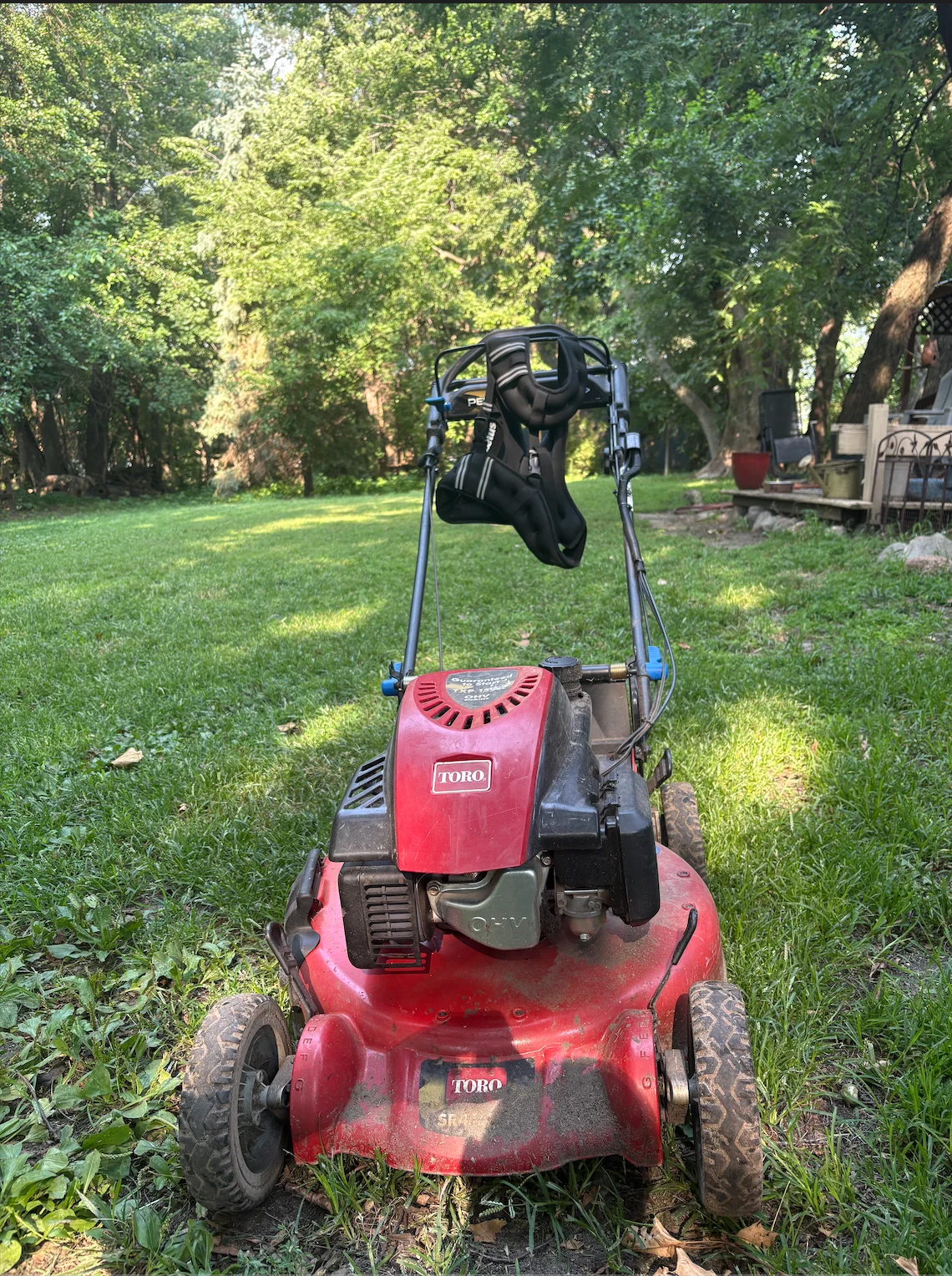
Lately, some of my best workouts have happened while I was mowing the lawn.
I put on a weighted vest, start pushing the mower, and turn a household chore into loaded conditioning. I use the same vest on my indoor treadmill and on the walking path outside my house. The route doesn’t change. The speed may not change much. I’m simply carrying more mass, so my body has to work harder to move me through space.
It is exercise reduced to caveman physics: walking is useful; walking while heavier is harder.
I’m a personal trainer with access to a gym and enough exercise knowledge to make fitness as complicated as I want. I can manipulate frequency, intensity, volume, rest periods, tempo, exercise order, and seventeen other variables until the program looks like it requires an engineering degree.
And yet, I keep returning to a heavy vest and a patch of ground near my house.
There is a lesson in that.
A simple way to make walking harder
Walking is one of the easiest forms of exercise to recover from and repeat. That is a large part of its value. It requires little planning, no commute, and almost no equipment. Most people can do it often without feeling as though they have been hit by a truck.
The limitation is equally obvious: once you are accustomed to walking, an easy stroll may no longer create much of a training challenge.
You can walk faster. You can walk farther. You can find a hill. Or you can put on a weighted vest.
A vest raises the cost of the same basic movement without requiring you to run. In a 2026 treadmill study of sedentary adults with overweight or mild obesity, wearing a vest equal to 10% of body weight increased oxygen use by about 7%, heart rate by about 4%, and measured energy expenditure by about 7% across several walking speeds. The effect grew at the faster speeds.
Another small study in trained young adults found that the common weighted vests used in CrossFit increased the physiological demand of steep uphill walking and running without changing the basic gait measures the researchers tracked. That is promising, but it does not mean every load is harmless for every body. Added weight also means added force. Your joints, feet, back, and connective tissues still get a vote.
That is why I would begin conservatively. Use a load that lets you walk normally, maintain your posture, and finish without joint pain. Five percent of body weight is a sensible experiment for many people, not a sacred prescription. Add time before you add much more weight. If the vest makes you stomp around like Frankenstein or leaves your knees pissed off the next day, the dosage is wrong.
The goal is to make walking more productive, not to win a toughness contest against your driveway.
My house has become a scattered gym
The vest is only one part of a larger change in how I have been exercising.
Some days I train for an hour in the gym. I lift, do my conditioning, and then spend the rest of the day working, reading, gaming, or sitting calmly with my dogs. The workout is one defined event.
Other days, exercise arrives in pieces.
I may jump into a half-hour session with a client. Later, I use the pull-up bar and push-up handles at home. Between work and gaming sessions, I might do a short bodyweight leg workout that pumps me full of blood and endorphins, clears my head, and sends me back to the rest of my day in a better state.
Then I put on the vest to mow.
None of those bouts needs to become a heroic workout. Taken together, they produce a physically active day with a useful mixture of strength, conditioning, movement, and mood regulation. They also fit the day I actually have instead of the imaginary day on which nothing interrupts me and I always feel like driving to the gym.
People now call these short sessions “micro-workouts” or “exercise snacks.” Fine. Fitness culture must give everything a marketable name before we are allowed to notice that it works.
The underlying idea is simple: reduce the duration and increase the frequency.
Short bouts count
For years, exercise advice implied that activity had to last at least ten continuous minutes before it counted toward the weekly target. The current Physical Activity Guidelines for Americans removed that requirement. Any amount of moderate-to-vigorous activity can contribute, and small amounts spread through the day can produce benefits.
That change matters because the ten-minute rule was never how human movement worked in the first place. We walk upstairs, carry groceries, move furniture, chase dogs, do yardwork, lift something heavy, sit down, and move again later. Life accumulates activity whether or not it arrives in a tidy 60-minute rectangle on a calendar.
Short bouts are especially useful for breaking up long stretches of sitting. A systematic review of 72 studies found that frequent, brief bouts of light activity reduced post-meal glucose and insulin compared with uninterrupted sitting. The evidence was stronger for those immediate metabolic effects than for grand long-term promises, but that alone makes the point: the body responds when you move. It does not reject the stimulus because you forgot to change into gym shorts.
Micro-workouts also solve a behavioral problem. Starting a 10-minute session carries less friction than starting a 75-minute one. There is less equipment to gather, less negotiation with the calendar, and less temptation to postpone the whole thing until conditions are perfect.
Ten minutes is easy to dismiss. It is also easy to begin. That second feature is more important.
Exercise does not have to look the same every day
The mistake is assuming that every good training week should have the same shape.
One hour in the gym can be excellent. Three 20-minute sessions can also be excellent. A weighted walk, a few sets of pull-ups and push-ups, and some bodyweight legs may be exactly what keeps training alive during a crowded day.
These options are not perfectly interchangeable. A walk in a vest will not replace heavy strength training. A few push-ups between gaming sessions will not prepare you for a marathon. Short sessions can make it harder to warm up properly for heavy or highly technical work, and random exercise alone may not provide enough progressive overload to pursue a specific performance goal.
Specific goals still require specific training.
But most adults do not fail because their exercise was insufficiently optimized. They fail because the plan only works under one narrow set of conditions. The gym session must begin at the proper hour, last the proper amount of time, use the proper equipment, and occur while they possess the proper mood. Then work runs late, a kid gets sick, travel happens, the weather turns ugly, or they simply do not feel like making the trip.
The perfect hour disappears, so they do nothing.
A flexible system gives you somewhere else to go.
You can shorten the workout without abandoning it. You can scatter it across the day. You can move the session home. You can make an ordinary walk harder, or make an ordinary chore count for more. You can preserve the relationship with exercise even when the original plan gets blown to hell.
Continuity is the real skill
There is a difference between following a program and knowing how to train.
Following a program means executing what is written. Knowing how to train means understanding the purpose well enough to adjust when life changes the available time, equipment, energy, or location.
Some seasons support long gym time and orderly progression. Use them.
Some seasons give you half an hour, a pull-up bar, a lawn that needs mowing, and enough energy to do something useful. Use those too.
The weighted vest has become one of my favorite tools because it lowers the distance between deciding to exercise and actually doing it. I can put it on inside my house, step onto the treadmill, walk out the door, or start the mower. No commute. No elaborate setup. No need to convince myself that the session deserves its own cinematic training montage.
Just movement, made harder.
The larger lesson has very little to do with the vest. Sustainable exercise is allowed to change shape. Some days it is one long, focused session followed by a quiet day. Other days it appears in several small bursts between work, chores, clients, dogs, and games.
The weekly pattern can bend without breaking.
That is the skill: flexing with the life you have while refusing to lose continuity with the person you are trying to remain.
Practical starting point
If weighted-vest walking sounds useful, keep the first experiment boring:
Start with an easy route, pace, and surface you already tolerate well.
Use a light, evenly distributed load that does not alter your gait or posture.
Begin with 10 to 20 minutes and see how your feet, knees, hips, back, and shoulders feel later that day and the next morning.
Increase one variable at a time: duration, speed, incline, or load.
Use the vest to complement strength training, not impersonate it.
Stop and reassess if you develop joint pain, numbness, unusual shortness of breath, chest symptoms, or a meaningful change in how you walk.
You do not need a weighted vest to use the broader idea. Keep a resistance band near your desk. Put a pull-up bar in a doorway. Do a few sets of squats while dinner cooks. Walk for ten minutes after a meal. Make your environment more capable of producing movement on command.
Your exercise plan should have more than one doorway.
The body is remarkably unconcerned with whether your workout looked official. Give it a useful challenge, recover from it, and come back often enough to keep the thread unbroken. - Michael Beiter Certified Personal Trainer
Nutrition Coach
Sleep, Stress Management, and Recovery Coach
References
Dossou J, Majed L, Townsend N. Validity of energy expenditure from combined accelerometry and heart rate during load carriage in adults with overweight to mild obesity. European Journal of Applied Physiology. 2026.
Gaffney CJ, Cunnington J, Rattley K, et al. Weighted vests in CrossFit increase physiological stress during walking and running without changes in spatiotemporal gait parameters. Ergonomics. 2022;65(1):147–158.
U.S. Department of Health and Human Services. Top 10 Things to Know About the Second Edition of the Physical Activity Guidelines for Americans.
Chastin SFM, De Craemer M, De Cocker K, et al. How does light-intensity physical activity associate with adult cardiometabolic health and mortality?. British Journal of Sports Medicine. 2019;53(6):370–376.