In nearly 15 years of nutrition coaching, I’ve heard some version of this sentence almost every single week:
“Oh, I don’t eat any of that stuff anymore… but the kids love it.”
And every time I hear it, part of my brain short-circuits.
Wait a second.
You—the adult purchasing the food—understand ultra-processing. You read ingredient labels. You know certain foods leave you sluggish, inflamed, or constantly hungry. You actively avoid those foods because you believe they’re harmful to your health.
…but you’ll feed them to your growing children?
What?
I’m not saying this to shame parents. Honestly, I understand how we got here.
Most parents today were raised in the peak era of convenience food marketing. Neon snack aisles. Cartoon mascots. “Kid food” becoming an entirely separate category from real food. We normalized the idea that adults eat grilled chicken and vegetables while children survive on beige freezer food, crackers shaped like animals, and yogurt tubes with more additives than actual nutrition.
It became cultural.
And most people never stop to question it.
That’s why one of my recent coaching conversations hit me so hard.
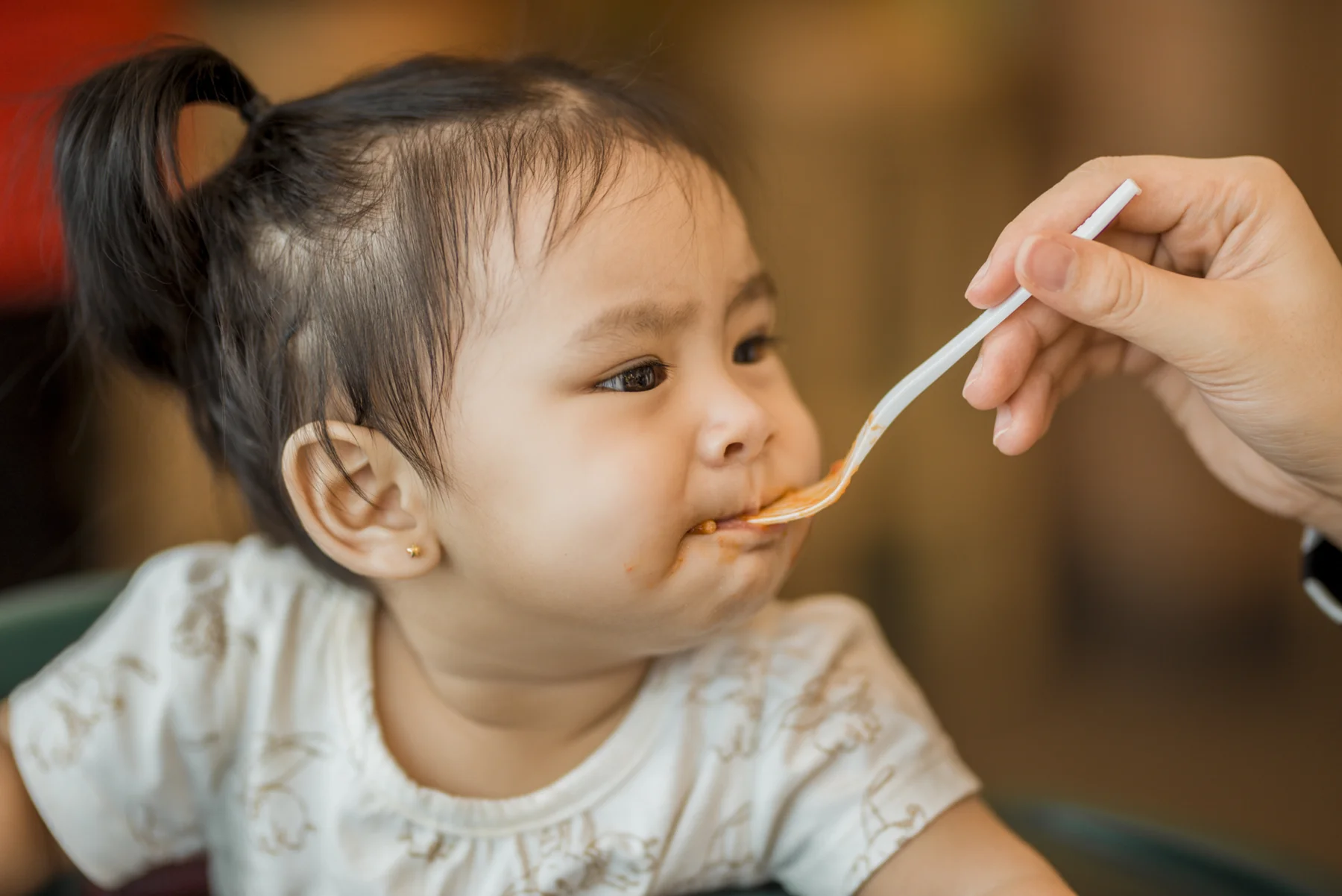
A client of mine came in talking about how her 15-month-old daughter was trying salmon, homemade sweet potatoes, and new vegetables. She told me she’s becoming more open to foods she herself normally wouldn’t eat because she wants her daughter exposed to better nutrition early.
Read that again.
Instead of lowering the nutritional standard for her child…
she raised the standard for herself.
That is the exact opposite of what I usually hear.
She’s trying recipes with fewer ingredients. Better sourcing. More color. More variety. More whole foods. Not because she suddenly became obsessed with “clean eating,” but because motherhood changed the lens through which she views food.
And honestly?
That’s how generational change actually happens.
Not through screaming at people online.
Not through perfection.
Not through fear.
Through tiny shifts in household norms.
A child watching their parents eat vegetables.
A toddler trying salmon because mom eats salmon.
A freezer stocked with shredded chicken instead of hyper-palatable snack food.
A parent learning to cook differently because someone small is watching.
Most people don’t notice these moments because they seem insignificant.
I notice them because this is my job.
This is the ripple effect of coaching that almost nobody sees.
People think nutrition coaching is about weight loss. Sometimes it is. But sometimes it’s about something much bigger:
Changing the default operating system of a family.
Helping someone move from:
“I know this food is bad for me.”
to:
“Then why would I feed it to the people I love most?”
That shift matters.
And if enough households make it?
That’s generational health change.
Not flashy.
Not viral.
Not instant.
But real.
What Does the Research Say?
What makes this so important is that the science strongly supports what many parents intuitively notice:
Early food experiences matter. A lot.
Research consistently shows that taste preferences begin forming incredibly early—during pregnancy, breastfeeding, infancy, and the toddler years. Children aren’t born automatically loving chicken nuggets and rejecting vegetables. Preference is shaped through repeated exposure, familiarity, and social modeling.
In other words: kids tend to learn to eat the way the people around them eat.
One of the strongest predictors of a child’s long-term eating patterns is parental modeling. When parents regularly eat fruits, vegetables, proteins, and minimally processed foods themselves, children are significantly more likely to accept and prefer those foods over time. Not instantly. Not perfectly. But gradually and consistently.
That last part matters because many parents unintentionally quit too early.
A toddler rejecting broccoli once doesn’t mean they “hate vegetables.” Studies suggest children may need repeated exposure—sometimes 10 to 15 times or more—before a new food becomes familiar and accepted. The issue often isn’t the food itself. It’s exposure, consistency, and environment.
Researchers also know that highly processed foods engineered around hyper-palatability—high combinations of sugar, salt, fat, and artificial flavoring—can shift preference toward more intensely stimulating foods and away from simpler whole foods. That doesn’t mean a child can never enjoy processed foods. It means the default food environment matters.
And this is where parents have enormous influence.
Not through perfection.
Not through rigid food rules.
Not through fear.
Through normalization.
Children normalize what repeatedly shows up in their home:
What parents cook
What parents snack on
What parents order at restaurants
What parents keep in the freezer
What parents say about food
What parents visibly enjoy eating
That’s why my client’s shift stood out so much to me.
She wasn’t forcing “healthy eating” onto her daughter while secretly eating differently herself. She was allowing her daughter’s curiosity to expand her own relationship with food.
That’s powerful.
Because children don’t just inherit genetics.
They inherit environments.
References & Resources
Birch LL, Fisher JO. Development of Eating Behaviors Among Children and Adolescents. Pediatrics. 1998;101(Supplement 2):539–549.
Ventura AK, Worobey J. Early Influences on the Development of Food Preferences. Current Biology. 2013;23(9)–R408.
Savage JS, Fisher JO, Birch LL. Parental Influence on Eating Behavior: Conception to Adolescence. Journal of Law, Medicine & Ethics. 2007;35(1):22–34.
Wardle J, Cooke L. Genetic and Environmental Determinants of Children’s Food Preferences. British Journal of Nutrition. 2008;99(S1)–S21.
Johnson SL. Developmental and Environmental Influences on Young Children’s Vegetable Preferences and Consumption. Advances in Nutrition. 2016;7(1):220S–231S.
Monteiro CA et al. Ultra-Processed Foods: What They Are and How to Identify Them. Public Health Nutrition. 2019;22(5):936–941.
Nicklaus S. The Role of Food Experiences During Early Childhood in Food Pleasure Learning. Appetite. 2016;104:3–9.