One year of training, nutrition, and learning how to fuel a growing athlete.
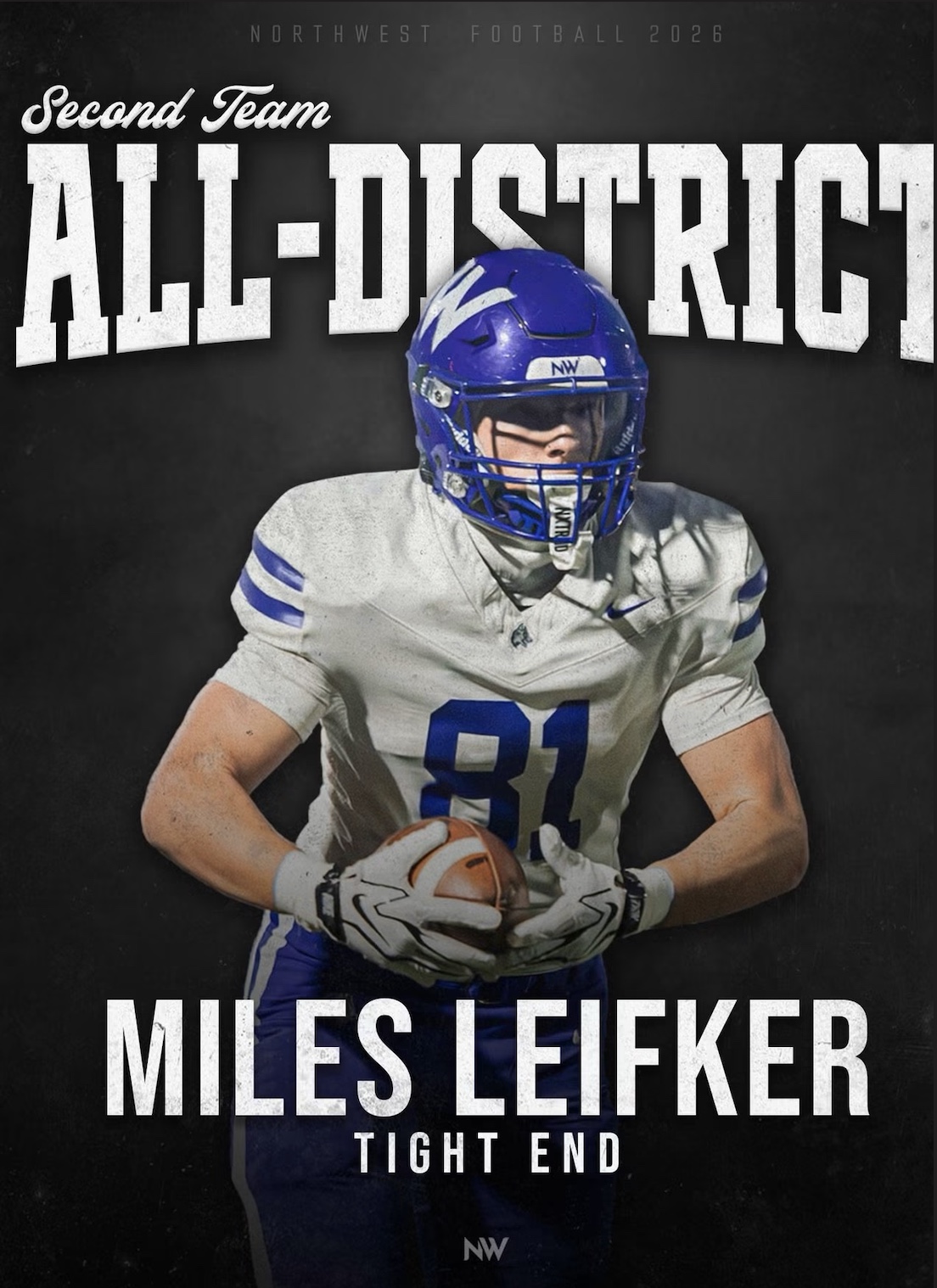
Second Team All-District. Varsity football. A 4.8-second 40-yard dash. And he's only a sophomore.
That's how Miles Leifker finished his 2026 football season at Northwest High School.
I've had the pleasure of working with Miles and his mom, Denise, on his nutrition and athletic development over the past year. Watching him earn All-District recognition at tight end was a hell of a way to finish the season.
But the award is only the latest chapter.
What interests me most as his coach is everything that went into making this season possible.
Building an athlete, not just adding weight
When we started working together, the objective was straightforward: help Miles develop the size, strength, speed, and physical capacity to compete at a higher level.
For a growing football player, those goals require some careful navigation.
Adding muscle is useful. Adding strength is useful. But if an athlete gains size and loses speed, we've potentially created a new problem while solving another.
Miles had legitimate concerns about this.
At one check-in, he told me he was worried about getting too big or gaining too much fat. He wanted to be bigger, but he didn't want to feel heavy.
Fair concern.
Our approach was to monitor his bodyweight alongside his athletic performance rather than treating weight gain as the ultimate measure of success.
And the results were encouraging.
His 40-yard dash improved from approximately 5.4 seconds to 4.8 seconds, while his size and strength increased.
By summer, he was attending camps at Iowa, Iowa State, and UNI, testing himself against increasingly competitive athletes.
He felt bigger. He felt faster. And perhaps most importantly, he felt more confident.
That confidence carried into football season.
The nutrition challenge nobody puts in the highlight reel
Here's something that doesn't get enough attention in youth sports nutrition:
Teenage athletes have to eat like athletes while living like teenagers.
Miles has school, homework, practices, games, friends, camps, and an appetite that occasionally resembles a bottomless pit.
Then there's fast food.
Lots of fast food.
We could have given Miles a meticulously calculated meal plan with six perfectly timed meals, weighed portions, and a list of approved ingredients.
And Denise would have needed to quit her job to become his personal chef.
No thanks.
Instead, we built a flexible system that could survive actual teenage life.
Our 80/20 approach
During summer, we introduced an 80/20 framework.
Most meals would come from reliable foundations: home-cooked food, prepared meals, sandwiches, protein-rich snacks, fruit, vegetables, and other foods that supported his training.
The remaining meals were flexible.
Five Guys? Fine.
Pizza with friends? Fine.
A burger after football? Also fine.
We initially gave Miles a monthly budget of 24 flexible meals, tracked through a simple punch system in his coaching app.
Then something interesting happened.
Miles decided 24 was too many.
He recognized that the allowance was large enough to let him eat out almost every day, so we reduced it to 16.
That's a coaching win.
The kid was beginning to evaluate his own habits and adjust them without needing an adult to police every decision.
Learning to fuel performance
As summer training intensified, Miles started experiencing the other side of athletic development: enormous hunger.
Three-hour football sessions in the Iowa heat will do that.
We discovered that going into those sessions without breakfast was a pretty reliable recipe for feeling terrible.
Shocking, I know.
So we worked on practical fueling strategies.
Food before football. Carbohydrates and fluids around training. Protein and carbohydrates afterward. Convenient snacks available throughout the day.
We also experimented with short periods of food logging to better understand his calories, protein, carbohydrates, and hydration.
This is where I believe nutrition education becomes especially valuable.
Rather than expecting Miles to follow someone else's meal plan indefinitely, we're teaching him how to evaluate what his body needs.
How does he feel when he eats before training?
Which school lunches actually satisfy him?
What happens to his recovery when he eats enough?
How can he make good choices when his parents aren't home?
These are skills he'll be able to use long after football.
The school lunch problem
By fall, our biggest challenge wasn't some complicated sports nutrition question.
It was school lunch.
Some days Miles loved the options. Other days, not so much.
We settled on a practical approach: review the school menu ahead of time, choose three meals he'll eat at school, and bring lunch from home on the other two days.
Meanwhile, foods like beef sticks, sandwiches, yogurt, fruit, and other easy snacks helped fill the gaps between school and practice.
Nothing revolutionary.
Just a teenager learning how to feed himself consistently.
And a mom who doesn't have to spend every evening wondering what the hell he's going to eat tomorrow.
When the work starts showing up on Friday nights
By the beginning of his sophomore season, Miles had earned varsity playing time at wide receiver and tight end.
He was catching passes, blocking defenders significantly bigger than himself, and contributing to his team's offense.
He scored his first varsity touchdown against Valley—a moment he understandably singled out as one of his favorite memories of the season.
Throughout the season, he reported maintaining his strength, speed, and size. Sleep and recovery were going well, too.
And by the end of the year, he'd earned Second Team All-District honors at tight end.
I'm proud of that accomplishment.
I'm equally pleased by how much he's learned along the way.
Because while nutrition coaching contributed to the foundation supporting his development, Miles earned that recognition through his own work, practices, games, and commitment to improving.
His coaches, teammates, speed training, strength development, and family support all played important roles.
Nutrition is one piece of the puzzle. An important piece, but still one piece.
Next up: The offseason
Now we're back to where we started.
The next development phase.
Miles wants more speed, more strength, more muscle, and better football skills. He's also planning to compete in track and attend more camps next summer.
Our approach will remain familiar:
Train progressively. Eat enough to support growth and recovery. Monitor performance. Make adjustments when necessary.
And continue helping Miles take more ownership of the process.
We don't need him obsessing over a number on the scale or chasing the physique of a 25-year-old professional athlete. He's still growing.
We want him healthy, capable, confident, and prepared to compete.
Closing thoughts
After nearly two decades working in fitness and nutrition, one of the things I appreciate most is watching someone develop skills they can carry forward independently.
With younger athletes, that includes understanding why food matters and how to make decisions without constant supervision.
Miles and Denise have been a great example of that partnership.
Denise helps create an environment where useful choices are available. Miles increasingly takes responsibility for making those choices. My job is to provide direction, assess progress, and help them adjust when something isn't working.
Over the past year, we've watched Miles become bigger, faster, stronger, and more confident.
Now he's an All-District football player.
Pretty damn good return on a year of consistent work.
Congratulations, Miles. You've earned it.
And we're just getting started.
Developing an athlete of your own?
Strength training and practice are only part of athletic development. Nutrition, recovery, and learning how to fuel appropriately matter, too.
At PCS Nutrition, I help athletes and families build practical nutrition systems that support performance without turning every meal into another obligation.
Interested in nutrition coaching for your athlete? Get in touch to discuss coaching.