
Fitness, Freedom, and the Strange Miracle of Being Born Here

America turns 250 today.
That number is almost too big to feel. Two and a half centuries of argument, invention, sacrifice, contradiction, repair, failure, progress, noise, work, and cooperation. A whole country built by people who often disagreed about nearly everything except the next necessary thing that had to get done.
That is the image that comes to mind when I think about America.
Cooperation.
Not the sentimental kind. Not everyone standing around in matching shirts pretending to love each other. Real cooperation. The kind where people with different beliefs, backgrounds, temperaments, politics, religions, jobs, habits, and personal problems still manage to build roads, stock grocery stores, teach children, wire houses, run gyms, care for patients, deliver food, fix pipes, coach teams, open businesses, and keep the whole ridiculous experiment moving.
That is what amazes me.
I can see it in small, ordinary places. A gym. A basement. A grocery store. A drive down almost any street in Des Moines. Houses with lights on. Kids playing. People going to work. Food on shelves. Public schools. Hospitals. Libraries. Internet delivered through the air like we all live inside a science fiction novel and somehow mostly complain that the Wi-Fi is slow.
Which, to be fair, it sometimes is.
But still.
The ordinary conveniences of my life would look absurd to most humans who have ever lived. Plumbing. Running water. Electricity. Refrigeration. Safe roads. Public education. Emergency medicine. Food abundance. The internet. Access to information. Access to people. The ability to start a business from a laptop, a gym, a phone, and a stubborn interest in helping people live better.
If you remember Maslow’s hierarchy of needs from some psychology class, he arranged human needs from the base of survival all the way up to self-actualization. Food, water, shelter, safety, belonging, esteem, purpose, growth.
I have had every level of that pyramid met, supported, and reinforced by the people and community I was born into.
That is not a small thing.
It is not normal across history.
It is not guaranteed.
And on America’s 250th birthday, I find myself almost overwhelmed by it.
The Basement Gym
Before fitness became my career, it was a basement.
My mom bought me a Gold’s Gym rack when I was in 7th grade. It was a monstrosity. It took up the whole basement. It smelled damp, because of course it did. It sounded like an angry teenager listening to rock and rap. And somehow, it felt like home.
That was the first gym I fell in love with.
I did not understand much yet. I could not have explained physiology, programming, nutrition, recovery, or behavior change. I definitely could not have explained how that basement would turn into a career.
But I understood something important before I had the words for it:
Taking care of yourself matters.
At first, the gym was about confidence. I did not have much. Lifting gave me a place to put emotion into motion. It gave me a way to feel capable. It gave me a place to return to when I got pulled too far into things that did not serve me.
The gym has always done that for me.
It is a place where the abstract becomes physical. Anxiety becomes reps. Frustration becomes effort. Confusion becomes a set, a rest period, another set. You learn quickly that feelings matter, but they do not get to make every decision. The bar weighs what it weighs. The clock moves how it moves. Your body adapts or it does not. Reality has the final vote.
There is something deeply useful about that.
Arnold and the golden age bodybuilders were my first proof that fitness could be a serious way to live. I took bodybuilding magazines and books to football and wrestling coaches, trying to explain what I was interested in. Mostly they told me to practice sports.
So I did.
But my real interest was always the weight room and the kitchen.
The gym taught me discipline. Nutrition taught me leverage.
My early results were not great, mostly because my eating was not great. I was training hard, but I did not yet understand the role food played in making training actually work. When I learned more about protein, calories, macros, meal structure, and consistency, the whole thing opened up.
Food stopped being just food in my early 20s, when I was stacking medication after medication for seemingly random illnesses and trying to figure out why I felt so bad.
Food started becoming medicine then.
Not medicine in the fake internet way, where a guy with a podcast tells you blueberries cure civilization. Medicine in the practical way: what you eat changes how you feel, recover, train, sleep, think, and live.
Once I experienced that, I wanted to show other people.
That desire eventually became my work.
The American Fitness Inheritance
My story did not happen in a vacuum.
It happened inside a country that built public schools, youth sports, weight rooms, libraries, grocery stores, roads, medical systems, and a culture unusually obsessed with self-improvement.
Some of that obsession is useful.
Some of it is insane.
America has always had a strange relationship with fitness. We love strength, sport, competition, reinvention, and transformation. We also love shortcuts, extremes, miracle diets, supplement hype, and turning every basic human problem into a product with a payment plan.
Both things are true.
The American fitness story has roots in military readiness, school athletics, physical education, and national concern about whether young people were strong enough for the demands of modern life. President Eisenhower established the President’s Council on Youth Fitness in 1956, after national concern about the physical fitness of American youth. Over time, that council evolved into what is now the President’s Council on Sports, Fitness & Nutrition.
If you grew up around the President’s Physical Fitness Test, Jump Rope for Heart, school weight rooms, gym class mile runs, pull-up bars, and coaches yelling things that would now probably require a committee meeting, you inherited part of that history.
Some of it helped.
Some of it humiliated kids who most needed a better invitation into movement.
The useful part was that it made physical education feel like part of education. Not an accessory. Not a filler class. Not something separate from math, English, and science. Boys and girls did it together. Kids learned, at least in theory, that the body was not just something you dragged around while your brain did the important work.
That mattered.
But that culture misunderstood plenty. It misunderstood developmental differences between boys and girls. It misunderstood performance anxiety. It misunderstood what happens when a bunch of hormone-fueled teenagers in tight clothes are told to perform strength, speed, coordination, and endurance in front of each other.
A shocking amount of American adulthood can probably be traced back to someone having a weird experience in gym class.
The older model understood something important: fitness matters. Strong, active people are more capable, more resilient, and harder to break.
But it also missed something important: shame is a terrible long-term coach.
We have learned a lot since then. Or at least we have had the opportunity to learn.
The fitness culture I have witnessed from 1989 to 2026 has changed dramatically. I grew up with school weight rooms, football practices, wrestling rooms, bodybuilding magazines, supplement ads, VHS tapes, cable fitness personalities, and the early internet. Then came commercial gyms, boutique studios, aerobics, spinning, yoga, hot yoga, CrossFit, group training, online programs, fitness apps, wearables, remote coaching, video libraries, macro tracking, bloodwork, recovery metrics, sleep scores, and precision tools that would have looked impossible when I was a kid.
We have moved from “go harder” to “go smarter.”
Not everywhere. Not always. There are still plenty of people trying to solve every problem with punishment and caffeine.
But the best parts of the field have matured.
Good coaching now understands that sleep matters. Stress matters. Recovery matters. Food quality matters. Protein matters. Strength training matters. Walking matters. Environment matters. Mental health matters. So does the fact that people have jobs, kids, aging parents, hormones, injuries, marriages, grief, travel, and lives that do not care what their spreadsheet says.
The American Nutrition Inheritance
Nutrition has followed a similar path: useful progress tangled up with plenty of nonsense.
American nutrition culture has gotten a lot wrong.
It has villainized entire food categories. It has ignored evidence when lobbying and money had louder voices. It has engineered addictive properties into foods, targeted children and mothers, wrapped confusion in marketing, and sold people a long list of malicious or semi-malicious garbage under the language of health.
That is the ugly side.
But there is another side worth recognizing.
This country has also taken nutrition seriously enough to build massive regulatory bodies, consumer protections, food labeling systems, nutrition research infrastructure, and standardization that previous generations could barely imagine. The first official Dietary Guidelines for Americans were released in 1980, and since then the guidelines have been updated every five years by the USDA and HHS.
That does not make every guideline perfect.
It does mean progress is real.
Regular people now have access to nutrition information previous generations could barely imagine. Nutrition labels. Macro tracking. Food databases. Sports nutrition research. Public health guidance. Coaching. Apps. Wearables. Bloodwork. Online education. Grocery stores with year-round access to foods that would have looked exotic or impossible to many of our ancestors.
That gives us more power.
It also gives us more responsibility.
Abundance is a double-edged sword. The same country that gives us food security also gives us endless hyper-palatable food. The same internet that gives us access to research also gives us influencers explaining metabolism like they learned it from a haunted vending machine. The same freedom that gives us options also gives us enough options to stay confused forever.
That is why coaching matters.
Not because people are helpless.
Because modern life is loud.
Freedom Is Not the Absence of Structure
When I think about health, freedom does not mean doing whatever you want whenever you want.
That is not freedom. That is impulse with branding.
Real freedom is having options. Freedom from fear. Freedom from guessing. Freedom from wasting time and money on the same problem every year. Freedom from losing the same weight over and over again. Freedom from program hopping. Freedom from confusion, shame, starting over, and feeling stuck.
The deeper freedom is being able to build a body and life that give you more choices.
Training teaches that.
Nutrition teaches that.
Macro tracking teaches that especially well when it is used correctly. It takes something emotional, vague, and often loaded with shame, and makes it observable. It turns “I have no idea what I’m doing” into “Here is what is happening.” Calories, protein, carbohydrates, fats, fiber, meals, patterns, tradeoffs.
Not morality.
Information.
Logic and science, systemized and emotionally decharged.
That is powerful because it gives people agency without pretending life is simple. You still have to work. You still have to plan. You still have to practice. But the mystery starts to shrink.
And once the mystery shrinks, fear usually shrinks with it.
That is one of the great possibilities of deliberate living inside American freedom. We have options galore for how to handle our health. More than almost any people at any point in human history.
The danger is thinking options alone will save us.
They will not.
Options need values. Tools need direction. Freedom needs chosen constraints. Otherwise self-improvement becomes just another treadmill, and not the useful kind with cup holders.
This country’s obsession with self-improvement and reinvention shaped me. It taught me that I was responsible for my life. If I wanted something, I had to set my mind to it and work.
I still believe that.
But I have also learned the limit.
Without defining what you are trying to build, self-improvement never ends. You can always be leaner, stronger, richer, more productive, more optimized, more impressive, more disciplined, more something.
At some point, “better” becomes a trap.
A lot of my coaching now is helping people improve, yes, but also helping them recognize enough. Enough leanness. Enough intensity. Enough tracking. Enough sacrifice. Enough chasing. Enough proving.
That is not laziness.
That is maturity.
A deliberate life is not a life spent constantly upgrading yourself like software. It is a life where your habits serve something human.
Your family.
Your work.
Your energy.
Your ability to age well.
Your ability to enjoy what you have while you are still here to enjoy it.
We Have More Time Than We Think, and Less Than We Waste
One of the great luxuries of modern American life is time.
Not unlimited time. Not easy time. Not “everyone is secretly lazy” time. That is not what I mean.
People are busy. Parents are busy. Caregivers are busy. Shift workers are busy. Business owners are busy. Life has friction.
But compared with most of human history, many Americans have access to something rare: discretionary time.
The Bureau of Labor Statistics’ American Time Use Survey shows that full-time employed people worked an average of 8.1 hours on days they worked in 2024. It also reports that, on an average day, 80 percent of people did household activities, spending about two hours on them. The same survey tracks leisure and sports time because modern Americans have enough non-survival time for that category to be measured at scale.
That is historically remarkable.
Again, not because life is easy. It is not.
But because the basic structure of life has changed. Most of us are not spending the majority of our waking hours finding water, preserving food, building shelter, defending the property, sewing every garment, chopping wood, or hoping an infection decides to be merciful.
We inherited systems that bought us time.
That does not mean we always use it well.
A lot of modern health coaching is really time-use coaching wearing gym clothes. Where does the day go? What gets protected? What gets sacrificed first? What do you say you value, and what does your calendar quietly reveal?
Sleep first.
Then food.
Then movement.
They are all medicine.
Use the time, place, tools, and freedom you have at your disposal to protect them with all your might. Once those are in place, climb Maslow’s hierarchy. Build meaning. Build relationships. Build skill. Build contribution. Build a life.
And if you are able to do that inside an orderly, safe, sanitary, mostly sane society like America, remember that you are among the most privileged people to ever live.
Do not take it for granted.
A Millennial Inheritance
I am a millennial, which means my generation has been blamed for enough things to qualify as a weather pattern.
We were too online. Too sensitive. Too into gaming. Too individualistic. Too into work-life balance. Too into therapy language. Too unwilling to accept the old deal.
Some of that criticism is fair. Some of it is lazy. Most of it depends on who is talking and whether they recently read a headline designed to irritate them.
Psychologist Jean Twenge’s work on generations has often focused on individualism, technology, slower life trajectories, work-life balance, recognition, youth mental health, and how digital tools have changed growing up and adulthood.
I do not think every generational claim should be treated like scripture, but some of the broad patterns are useful.
I grew up between two worlds.
One world said: bury your feelings, toughen up, drink it off, men do not cry, stiffen that upper lip, and do not talk about things that make everyone uncomfortable.
The other world said: pay attention to your mental health, build a life deliberately, question inherited scripts, use technology, seek meaning, and maybe do not confuse misery with virtue just because previous generations had better posture while suffering.
I am grateful for the best of both.
From the older fitness culture, I kept the bodybuilding philosophy that training can build both body and mind. I kept the respect for lifting, aerobics, stretching, discipline, repetition, and matching your life outside the gym with what you claim to care about inside it.
From the newer world, I kept the willingness to talk honestly about stress, sleep, emotion, identity, mental health, and sustainability.
Fitness was a regular part of everyday life for me until 2020 turned the world upside down and clarified something I probably should have understood sooner.
It was not optional.
It was a necessity.
Training was not just something I did to look better, feel confident, or chase a number. It underlied everything else I did. My mood. My energy. My discipline. My work. My ability to regulate myself. My ability to stay grounded.
That was true when I was young, and it is still true as I approach 40.
The result is not perfect. Nothing human is.
But it is better.
And that is what I want to pass forward: not a softer life, but a wiser one. Not less responsibility, but better responsibility. Not freedom from effort, but freedom from pointless suffering.
The Miracle of Making a Living This Way
One of the strangest privileges of my life is that I turned an interest into a career and lifestyle.
That sentence sounds normal now, but it is historically bizarre.
For most of human history, work was not an expression of personal interest. Work was survival. You did what the family did, what the land required, what the factory needed, what the economy allowed, or what kept food on the table.
I was born into a time and place where a kid could fall in love with lifting weights in a basement, study training and nutrition for years, coach people, build systems, use technology, start a business, and serve people for a living.
That is astonishing.
It is also not the traditional path most people my age took.
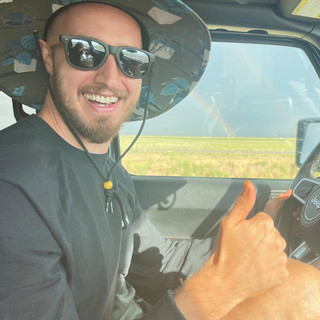
I have land. A brick house. Three golden retrievers. A Jeep in the garage. A work-life balance I built intentionally. Technology that lets me coach, write, track, communicate, learn, and run a business in ways 7th grade me would not believe.
I have the internet delivered through the air.
That still sounds fake.
My work required my effort, but it was not only my effort. That is the part I do not want to miss.
My business exists because of public education, law and order, infrastructure, roads, electricity, banking, property rights, payment systems, gyms, the internet, food systems, medical systems, clients with jobs, families with enough stability to care about long-term health, and a culture where coaching is even a thing a person can choose.
Hundreds of people support every client success story before I ever enter the picture.
Spouses. Doctors. Physical therapists. Teachers. Farmers. Truck drivers. Grocery workers. Researchers. Employers. Grandparents. Friends. Babysitters. Gym owners. The people who built the roads my clients drive on, the houses they sleep in, the schools their kids attend, and the food systems that make their macro targets more than a theoretical exercise.
My business sits inside a giant web of cooperation most of us never notice because it works well enough to become invisible.
That is the American miracle I feel today.
Not perfection.
Cooperation.
The gym is part of that web. So is the grocery store. So is the client who shows up after a long workday. So is the coach who writes the program. So is the person who stocked the chicken breast, repaired the squat rack, taught the anatomy class, manufactured the dumbbell, processed the payment, and kept the lights on.
I have had over 500 people come through my door since starting my business.
I avoided the common business advice to choose one narrow niche or avatar and obsess over that person. I understand why that advice exists. It makes marketing cleaner. It makes copy easier. It makes business coaches feel useful.
But I have always believed almost everyone can benefit from fitness and nutrition coaching.
My client base reflects that.
Different ages. Different jobs. Different goals. Different personalities. Different starting points. Different politics. Different family structures. Different relationships with food, exercise, stress, and their own bodies.
And beneath all that difference, I usually find the opposite of what I consume in media.
People are amazing.
Not always easy. Not always ready. Not always consistent. But amazing.
I admire my clients’ commitment to themselves. It takes a bit of selfishness to live this way in a culture of convenience. Not the ugly kind of selfishness. The necessary kind. The kind that says, “My health matters enough to protect.”
They show up time and time again. They trust the systems and science we use. They balance it all while navigating the regular hardships of life.
Coaching has taught me that people are far better than the internet wants us to believe.
In the news and online, people are sorted into conflict, outrage, stupidity, and tribal performance. In real life, most of the people I work with are disciplined, kind, resilient, tired, funny, generous, overwhelmed, committed, and trying.
That is a much better species than the internet advertises.
The coaching relationship is a dance. Fifty-fifty all the way. Sometimes it works and becomes one of those magical professional experiences where both people know something meaningful is happening. Sometimes it does not. As a business owner, I have learned to take my licks.
That has become part of what I teach clients too.
How to fail without quitting.
Because that is the real skill. Not never falling off. Not never missing a workout. Not never overeating. Not never losing momentum.
The skill is learning how to return.
The gym taught me that.
America gave me the freedom to build a life around teaching it.
Clear-Eyed Gratitude
I am not interested in cheap patriotism.
America is not simple. It never has been. A country this large, diverse, ambitious, wounded, inventive, divided, generous, and restless cannot be reduced to a slogan without losing the plot.
You can love a country without pretending it is flawless.
You can criticize a country without becoming cynical about it.
You can celebrate progress without denying harm.
You can feel gratitude without turning your brain off.
That is where I find myself today.
Grateful.
Not naive. Not blind. Not pretending every American has had the same experience I have had. But deeply grateful for what I inherited, what I have been able to build, and the people who made it possible.
I am grateful that I was born into a place where almost every basic need in my life was met by systems, people, and communities I did not build myself. That does not mean America is flawless. It means I can recognize the absurd gift of safety, plumbing, public schools, roads, electricity, opportunity, and community without losing sight of the work still left to do.
I can celebrate the fact that America has always contained the tools for its own improvement. The country has never perfectly lived up to its ideals, but those ideals have given generation after generation the language, leverage, and permission to demand better.
To me, “the American experiment” means millions of strangers trying to build a shared life together across race, religion, class, region, belief, and background. It means betting that ordinary people can govern, cooperate, criticize, contribute, and improve something larger than themselves.
That is different from simple nationalism.
Simple nationalism says, “We’re great because we’re us.”
The American experiment says, “We are responsible for testing whether freedom, cooperation, self-government, and human dignity can actually scale.”
That is a much bigger, harder, and more honest claim.
Every grocery store, gym, school, hospital, highway, farm, internet connection, and small business is proof that people who will never know each other can still build a functioning life together.
That might be the part that hits me the hardest.
I do not need to be famous, powerful, or politically connected to contribute to this place. I can build a business, serve my clients, improve my community, criticize what needs fixing, and still feel like I belong here.
I am proud that this country has produced so much cooperation, innovation, abundance, and opportunity from ordinary people doing useful work.
But pride does not require denial.
Real pride means loving something enough to tell the truth about it.
I am hopeful because I have seen people cooperate in real life far more often than the internet wants us to believe. I have seen teachers, coaches, clients, parents, neighbors, doctors, business owners, and complete strangers keep showing up for each other.
That does not erase the problems.
But it reminds me that the raw material for a better country is still everywhere.
I am grateful for public school teachers who tried.
For coaches who gave time.
For parents who supported strange interests.
For local mentors.
For doctors.
For neighbors.
For clients.
For Iowa kindness, including the particular brand of Midwest niceness that can be both genuinely beautiful and occasionally a polite hostage situation.
I am grateful for the basement gym.
For the weight room.
For the grocery store.
For the library.
For the internet.
For the freedom to experiment.
For the freedom to be wrong and learn.
For the freedom to build a business.
For the freedom to serve.
For the freedom to help people take better care of themselves in a country where health is both more possible and more confusing than ever.
Most of all, I am grateful for the chance to live deliberately.
That is what I want for my clients too.
Not perfection. Not optimization for its own sake. Not a life organized around abs, macros, step counts, supplements, and sleep scores until every normal human pleasure has been turned into a compliance problem.
A deliberate life.
A life where your body supports your values.
A life where your freedom becomes something you practice, not just something you claim.
A life where you can work hard, care for your family, serve your community, enjoy your food, lift something heavy, sleep like a mammal, and occasionally look around at the whole thing and think:
This is unbelievable.
Because it is.
Happy 250th birthday, America.
Thank you to everyone who came before us, everyone who keeps the lights on now, and everyone still trying to make this place worthy of the freedom it promises.
Now go use some of it well.
Sources
America250. “America250.” Accessed July 4, 2026.
Office of Disease Prevention and Health Promotion. “History of the Council.” President’s Council on Sports, Fitness & Nutrition. Accessed July 4, 2026.
John F. Kennedy Presidential Library and Museum. “The Federal Government Takes on Physical Fitness.” Accessed July 4, 2026.
U.S. Department of Health and Human Services and U.S. Department of Agriculture. “History of Dietary Guidance Development in the United States.” Dietary Guidelines for Americans. Accessed July 4, 2026.
U.S. Department of Health and Human Services and U.S. Department of Agriculture. “Previous Editions of the Dietary Guidelines for Americans.” Dietary Guidelines for Americans. Accessed July 4, 2026.
U.S. Bureau of Labor Statistics. “American Time Use Survey — 2024 Results.” Accessed July 4, 2026.
U.S. Bureau of Labor Statistics. “American Time Use Survey.” Accessed July 4, 2026.
American Psychological Association. “Unlocking the Psychology of Millennials, with Jean Twenge, PhD.” Speaking of Psychology. Accessed July 4, 2026.
Twenge, Jean M. “Research.” Accessed July 4, 2026.
Mayo Clinic Health System. “The Kindness Behind ‘Midwest Nice.’” Accessed July 4, 2026.


